
Introduction
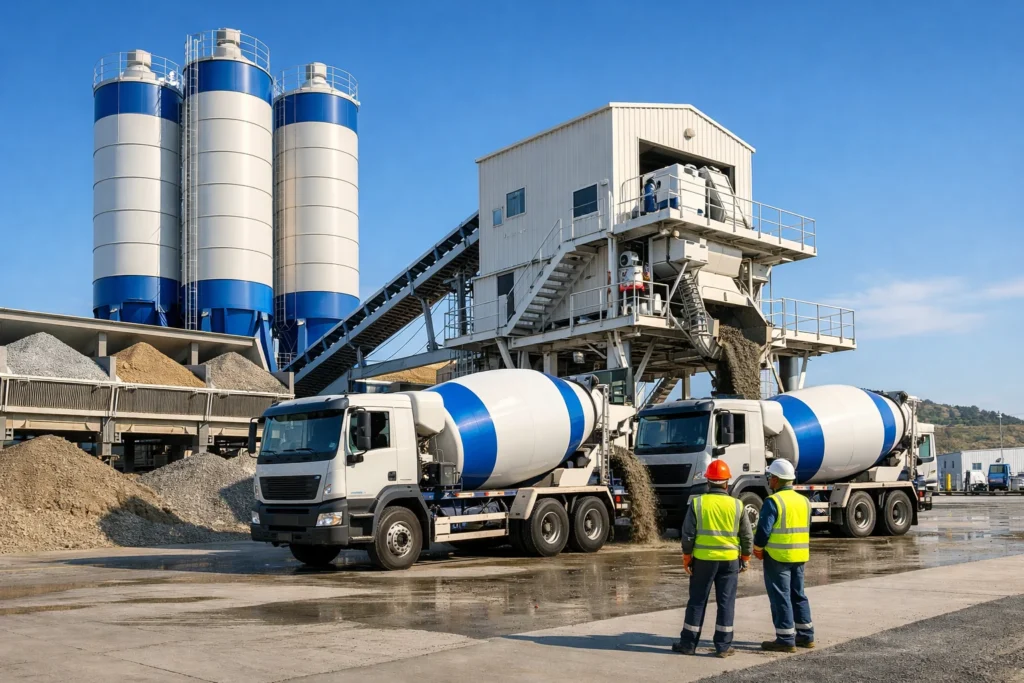
An RMC plant Raipur (Ready Mix Concrete plant) is one of the most important components in modern construction. With the increasing demand for high-quality, durable, and cost-effective construction materials, RMC plants have become a preferred solution for builders, contractors, and infrastructure developers. Instead of mixing concrete manually at construction sites, an RMC plant produces concrete in a controlled environment, ensuring consistency, strength, and reliability.
In today’s fast-paced construction industry, time and quality matter the most. This is where RMC plants play a crucial role by delivering ready-to-use concrete directly to the site. Whether it’s a residential building, commercial project, or large infrastructure work like bridges and highways, RMC plants ensure efficiency and precision.
What is an RMC Plant?
An RMC plant is a facility where concrete is manufactured by mixing cement, aggregates (sand, gravel), water, and admixtures in precise proportions. The final product is then transported to construction sites using transit mixers.
Unlike traditional on-site mixing, an RMC plant uses advanced machinery and automated systems to ensure uniform quality. This reduces human error and enhances the overall strength of the structure.
Many people search for rmc plant near me to find reliable suppliers who can deliver high-quality concrete quickly and efficiently for their projects.
Components of an RMC Plant
An RMC plant consists of several key components that work together to produce ready mix concrete:
Cement Silos
These are storage units where cement is stored safely before mixing.
Aggregate Bins
Used to store sand, gravel, and crushed stones in different compartments.
Batching System
This system measures and mixes raw materials in accurate proportions.
Mixing Unit
The mixer blends all materials to create a uniform concrete mix.
Control Panel
Modern RMC plants use computerized systems to control operations and maintain consistency.
Types of RMC Plants
Stationary RMC Plant
These plants are installed at a fixed location and are ideal for large-scale projects.
Mobile RMC Plant
Mobile plants can be shifted from one site to another, making them suitable for short-term projects.
Dry Mix Plant
In this type, materials are mixed partially at the plant and completed during transportation.
Wet Mix Plant
All ingredients are fully mixed at the plant before being delivered.
A widely recognized example in India is the ultra tech rmc plant, known for its quality standards and large-scale production capabilities.
How Does an RMC Plant Work?
The working process of an RMC Plant Raipur involves several steps:
- Raw materials are stored in separate compartments.
- The batching system measures materials based on the mix design.
- Materials are transferred to the mixer.
- Water and admixtures are added.
- The mixture is blended into uniform concrete.
- The concrete is loaded into transit mixers.
- It is delivered to the construction site.
This automated process ensures precision and reduces wastage.
Benefits of Using an RMC Plant
Consistent Quality
Concrete produced in RMC Plant Raipur is uniform and meets quality standards.
Time Saving
Construction projects are completed faster due to ready-to-use concrete.
Cost Efficient
Reduces labor costs and material wastage.
Eco-Friendly
Minimizes dust pollution and material wastage.
Better Strength
Controlled mixing results in stronger and more durable concrete.
Applications of RMC Plants
RMC plants are used in a wide range of construction projects:
- Residential buildings
- Commercial complexes
- Roads and highways
- Bridges and flyovers
- Dams and infrastructure projects
Builders often look for a near rmc plant to reduce transportation time and ensure fresh concrete delivery.
Concrete Batching Plant vs RMC Plant
A concrete batching plant rmc plant setup is often confused as the same thing. While both are similar, there is a slight difference:
- A batching plant focuses on mixing raw materials.
- An RMC plant includes batching, mixing, and delivery.
In simple terms, every RMC Plant Raipur has a batching system, but not every batching plant is a full RMC solution.
Government Standards and Guidelines
RMC plants in India must follow strict quality and safety guidelines. These standards ensure that the concrete produced is safe and durable.
You can refer to official construction standards from the government here:
👉 https://bis.gov.in (Bureau of Indian Standards)
These guidelines help maintain quality control and ensure safe construction practices across the country.
Factors to Consider Before Choosing an RMC Plant
Location
Choose a plant close to your site to avoid delays.
Quality Certification
Ensure the plant follows industry standards.
Production Capacity
Check if the plant can meet your project requirements.
Technology Used
Modern automated plants provide better consistency.
Supplier Reputation
Always work with trusted and experienced suppliers.
Future of RMC Plants
With rapid urbanization and infrastructure growth, the demand for RMC plants is increasing. Advanced technologies like automation, IoT, and AI are being integrated into modern plants to improve efficiency and quality.
The future of construction lies in smart and sustainable solutions, and RMC plants are at the center of this transformation.
Conclusion
An RMC plant is a game-changer in the construction industry. It ensures high-quality concrete, reduces project time, and improves overall efficiency. Whether you are working on a small residential project or a large infrastructure development, using ready mix concrete from a reliable plant is always a smart choice.
As construction demands continue to grow, RMC Plant Raipur will play an even bigger role in shaping modern cities and infrastructure.
FAQs
1. What is an RMC plant used for?
An RMC plant is used to produce ready mix concrete for construction projects.
2. Is RMC better than site-mixed concrete?
Yes, RMC provides better quality, consistency, and saves time compared to site mixing.
3. How far can RMC be transported?
Typically, RMC can be transported within 1.5 to 2 hours to maintain quality.
4. What materials are used in an RMC Plant Raipur ?
Cement, sand, aggregates, water, and admixtures are used.
5. How to find the best RMC plant near me?
Search online, check reviews, and choose a certified supplier with good reputation.
Read More
Want to explore more about construction and concrete solutions? Read more blogs here to learn tips, trends, and expert insights for better building decisions.