
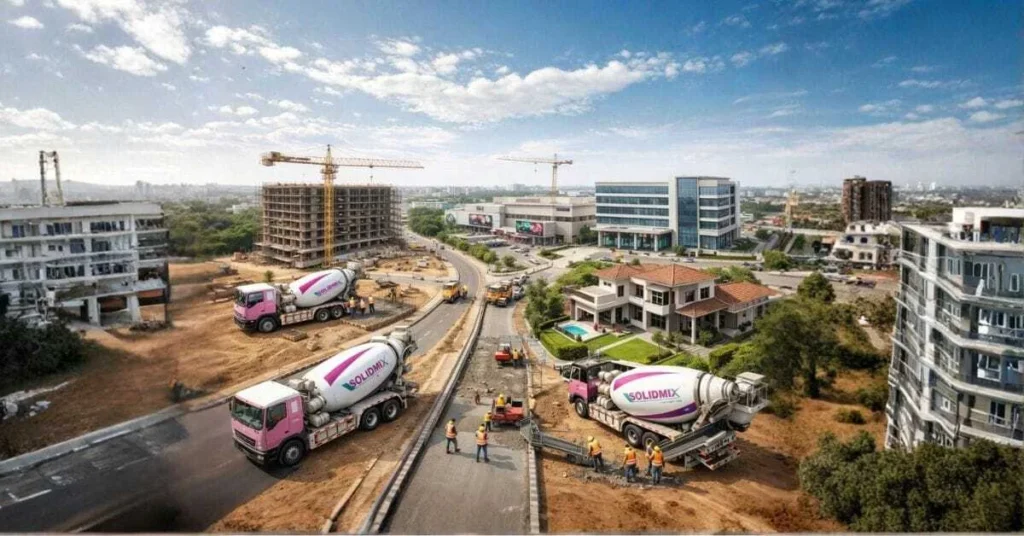
Modern transportation demands roads that can withstand heavy axle loads, extreme weather conditions, and high traffic volumes. This is where PQC Concrete comes into play. As a specialized high-quality material used in the construction of rigid pavements, it has transformed the way highways and runways are built. Unlike standard concrete used in buildings, this specific mix is designed for durability and flexural strength.
In this comprehensive guide, we will explore the technicalities of PQC, its application in infrastructure, and why it is preferred over flexible pavements for long-term projects. Understanding the composition and laying process of this material is essential for engineers, contractors, and students alike.
Introduction to Pavement Quality Concrete
When we talk about high-speed corridors and heavy-duty expressways, the term PQC often surfaces. But what exactly is the PQC full form? It stands for Pavement Quality Concrete. It is a high-grade cement concrete specifically designed for the top layer (surface course) of a rigid pavement.
Unlike the bitumen roads we see in local colonies, pqc road construction involves a complex design mix that ensures the surface does not deform under heat or heavy pressure. The primary goal of using PQC is to provide a smooth, skid-resistant, and durable surface that lasts for decades with minimal maintenance.
The Role of PQC in Road Construction
The application of PQC in road construction is a game-changer for national infrastructure. The process starts with a well-prepared base, usually consisting of a Dry Lean Concrete (DLC) layer. The PQC layer is then laid on top of this base to act as the primary load-bearing surface.
Superior Load Distribution
One of the biggest advantages of a pqc road is its ability to distribute loads over a wider area. In flexible pavements (asphalt), the load is transferred point-to-point through grain-to-grain contact. However, PQC acts like a rigid slab, meaning the pressure from a heavy truck is spread across a large section of the concrete, reducing the risk of subgrade failure.
Resistance to Weather and Chemicals
Traditional asphalt roads often melt during extreme summers or develop potholes during monsoon seasons. PQC Concrete is virtually immune to these issues. It does not soften in high temperatures and is resistant to oil spills and chemicals, which is why it is the standard choice for fuel stations and industrial loading bays.
Technical Specifications and Design Mix
To achieve the desired strength, the mix design for PQC is strictly regulated. Generally, a Grade of M40 or higher is used. The water-cement ratio is kept very low to ensure high density and strength, often requiring the use of superplasticizers to maintain workability.
Aggregate and Cement Quality
The aggregates used in pqc road projects must be hard, durable, and clean. Usually, a combination of 20mm and 10mm crushed stones is used. The cement content is carefully balanced—too little cement reduces strength, while too much can cause shrinkage cracks.
Flexural Strength vs. Compressive Strength
While most concrete is measured by its compressive strength, PQC Concrete is primarily judged by its flexural strength. Since road slabs are subject to bending forces under heavy wheels, the concrete must be able to resist tension. A typical PQC slab is designed to have a flexural strength of at least 4.5 MPa.
Step-by-Step Process of PQC in Road Construction
The laying of PQC is a mechanized process, often involving massive machines called slip-form pavers. Here is how a typical pqc road is constructed:
- Preparation of the Base: The DLC layer is cleaned and a separation membrane (usually a plastic sheet) is laid to prevent the PQC from sticking to the base.
- Laying the Mix: The concrete is produced in a batching plant and transported to the site. The paver spreads, levels, and compacts the concrete in a single pass.
- Joint Cutting: To control cracking, contraction joints are cut into the concrete after it has partially set.
- Curing: A curing compound is sprayed immediately to retain moisture, followed by water curing for at least 14 days.
For more technical standards on road design and cement quality, you can visit the Ministry of Road Transport and Highways (MoRTH), which provides official guidelines for all national highway projects in India.
Advantages of PQC Roads
Investing in pqc road infrastructure offers several long-term benefits:
- Long Life Span: These roads can last 30 to 40 years, whereas asphalt roads need resurfacing every 5 to 10 years.
- Fuel Efficiency: The rigid surface reduces the rolling resistance of vehicles, leading to slightly better fuel economy for heavy trucks.
- Visibility: The light grey color of concrete provides better visibility at night compared to black asphalt, improving safety.
- Environmental Impact: While cement production has a carbon footprint, the longevity of the road means fewer repairs and less material consumption over time.
Challenges and Considerations
Despite its benefits, using PQC Concrete has some drawbacks. The initial cost of construction is significantly higher than bitumen. Additionally, if the road is damaged, repairing concrete is much more difficult and time-consuming than patching an asphalt pothole. This is why the quality of the initial PQC full form implementation—Pavement Quality Concrete—is so critical; there is very little room for error.
Moreover, the curing time is a major factor. While an asphalt road can be opened to traffic within hours, a pqc road requires weeks of curing before it can handle heavy loads.
Conclusion
PQC Concrete stands as the backbone of modern rigid pavement technology. From the clear understanding of the PQC full form to its complex application as PQC in road construction, it is evident that this material is built for the future. By providing a durable, weather-resistant, and high-strength surface, pqc road projects ensure that our transport networks remain robust for generations to come.
Frequently Asked Questions (FAQ)
- What is the PQC full form in civil engineering?
The full form of PQC is Pavement Quality Concrete. It refers to the high-grade concrete layer used as the wearing surface in rigid pavement construction.
- What is the difference between PQC and DLC?
DLC (Dry Lean Concrete) is a lower-grade concrete used as a base layer, whereas PQC Concrete is a high-strength (usually M40+) layer that directly handles the traffic and weather.
- Why is a plastic sheet used under PQC in road construction?
A separation membrane (plastic sheet) is used to prevent the PQC from bonding with the DLC layer, allowing the slab to expand and contract freely without cracking.
- How long does a PQC road last?
A well-constructed pqc road typically has a design life of 30 to 50 years, making it highly cost-effective in the long run despite high initial costs.
- Which grade of concrete is used for PQC?
Generally, M40, M45, or M50 grades are used for PQC Concrete to ensure it meets the required flexural strength of 4.5 MPa or higher.
Read More Blogs Here
If you found this guide on PQC helpful, you might want to explore our other articles. We cover everything from concrete batching plant maintenance to the latest trends in sustainable construction materials.
Stay updated with our latest industry insights and technical guides to ensure your construction projects are always ahead of the curve. Read more on our blog page for expert advice on engineering and infrastructure