
Introduction
If you’ve ever been involved in construction or civil engineering work, you’ve probably come across the term “pqc full form.” At first, it might sound like just another technical abbreviation, but in reality, it plays a major role in how modern roads are built today.
With infrastructure growing rapidly—especially in countries like India—understanding the pqc full form is not just useful, it’s practically essential. In this blog, we’ll go beyond the definition and explain it in a way that actually makes sense on a real-world level.

What is PQC Full Form and Why It Matters in Road Construction
PQC Full Form: Pavement Quality Concrete
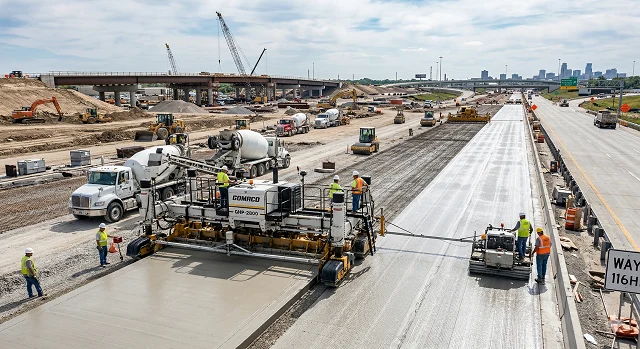
Now in simple terms, PQC is a type of high-strength concrete that is specifically designed for road construction. It is not the same as the concrete used in buildings.
PQC is made to handle:
- Constant heavy traffic
- Long-term wear and tear
- Changing weather conditions
That’s the main reason why when someone searches for pqc full form, they’re often trying to understand how durable roads and highways are actually built.
Where is PQC Used in Real-Life Projects
To really understand the pqc full form, it helps to look at its practical use.
You’ll commonly see PQC being used in:
- National highways and expressways
- Airport runways and taxiways
- Industrial areas with heavy vehicle movement
- Toll plazas and large parking zones
- Bus terminals and logistics hubs
The common factor here is simple—heavy load and continuous usage. That’s exactly where PQC performs best.
Materials Used in PQC and How the Mix is Prepared
Let’s break down what goes into making PQC. This part gives you a clearer idea of the practical side of the pqc full form.
| Material | Role in the Mix |
| Cement | Binds all materials together |
| Coarse Aggregates | Provides strength |
| Fine Aggregates | Improves surface finish |
| Water | Starts the chemical reaction |
| Admixtures | Enhances workability and quality |
| Fly Ash (optional) | Improves durability and reduces cost |
One important thing to note—PQC is not mixed randomly on-site. It is usually prepared in controlled environments like RMC plants to ensure consistency.
Difference Between PQC and Normal Concrete (Simple Comparison)
People often confuse PQC with regular concrete, so here’s a simple comparison:
| Feature | PQC | Normal Concrete |
| Strength | Very high (M40+) | Medium |
| Usage | Roads and pavements | Buildings |
| Durability | Long-lasting | Average |
| Load Capacity | Handles heavy vehicles | Light loads |
| Maintenance | Low | Higher |
In short, PQC is built for performance, while normal concrete is used for general construction.
How PQC Roads are Constructed on Site (Step-by-Step)
If you’ve ever seen road construction happening, this will feel familiar.
Here’s how PQC roads are typically built:
- The ground is leveled and compacted
- A base layer (DLC – Dry Lean Concrete) is laid
- PQC is poured using paving machines
- Compaction is done to remove air gaps
- Surface finishing is applied for grip
- Curing is carried out to develop strength
Each step matters. Even a small mistake can affect how long the road lasts.
Why PQC is Widely Used in Modern Road Construction
There’s a reason the pqc full form is becoming more common in construction today.
Some clear advantages include:
- High strength for heavy traffic
- Longer lifespan compared to traditional roads
- Lower maintenance requirements
- Better performance in different weather conditions
- More cost-effective over time
That’s why most modern highways today prefer PQC over older materials.
-
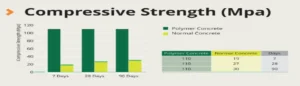
Strength Comparison Between PQC and Normal Concrete
If you look at this comparison, it becomes clear that PQC offers significantly higher strength than normal concrete. This is exactly why it is used in areas where durability really matters.
Government Standards for PQC in India
Another important point—PQC is not used randomly. There are proper standards and guidelines set by authorities.
You can refer to official specifications here:
https://morth.nic.in
These guidelines define everything from mix design to curing methods, ensuring quality and safety in road construction.
Why PQC is Important for Growing Infrastructure
With infrastructure expanding rapidly, the role of PQC is becoming even more important.
Here’s why:
- Traffic volume is increasing every year
- Roads need to last longer with minimal repairs
- Weather conditions can be extreme
- Projects are focusing on long-term durability
Because of all this, the pqc full form is now a key part of modern construction.
Role of RMC Plants in Maintaining PQC Quality
Behind every strong PQC road, there’s usually a well-managed RMC plant.
These plants help in:
- Maintaining the correct mix ratio
- Ensuring consistent quality
- Reducing human errors
- Speeding up the construction process
Without proper batching and control, achieving PQC quality would be difficult.
Conclusion: Understanding PQC Full Form in a Practical Way
By now, the pqc full form (Pavement Quality Concrete) should be clear—not just as a definition, but as a concept you can relate to.
It’s one of the most important materials used in modern road construction because it offers strength, durability, and long-term value.
If you are planning a project and looking for dependable concrete solutions, SolidMix RMC (https://solidmixrmc.com/) provides high-quality ready-mix concrete suitable for applications like PQC. Their focus on consistency and performance makes them a reliable choice.
Frequently Asked Questions
Q1. What is Pavement Quality Concrete (PQC)?
PQC is a strong type of concrete used for roads, highways, and pavements to handle heavy traffic.
Q2. Where is PQC mainly used?
It is used in highways, airport runways, industrial roads, and heavy-duty pavements.
Q3. Why is PQC important?
PQC provides high strength, durability, and long life for roads.
Q4. What makes PQC different from normal concrete?
PQC is stronger and more durable than regular concrete, designed for heavy loads and less wear.
Q5. How long does PQC last?
With proper construction and maintenance, PQC roads can last 20–30 years or more.
Read More
Want to explore more topics like this?
https://solidmixrmc.com/our-blogs-and-news/
https://solidmixrmc.com/construction/weather-impact-on-ready-mix-concrete/
https://solidmixrmc.com/rmc-plant/rmc-supplier-in-raipur-concrete-types/