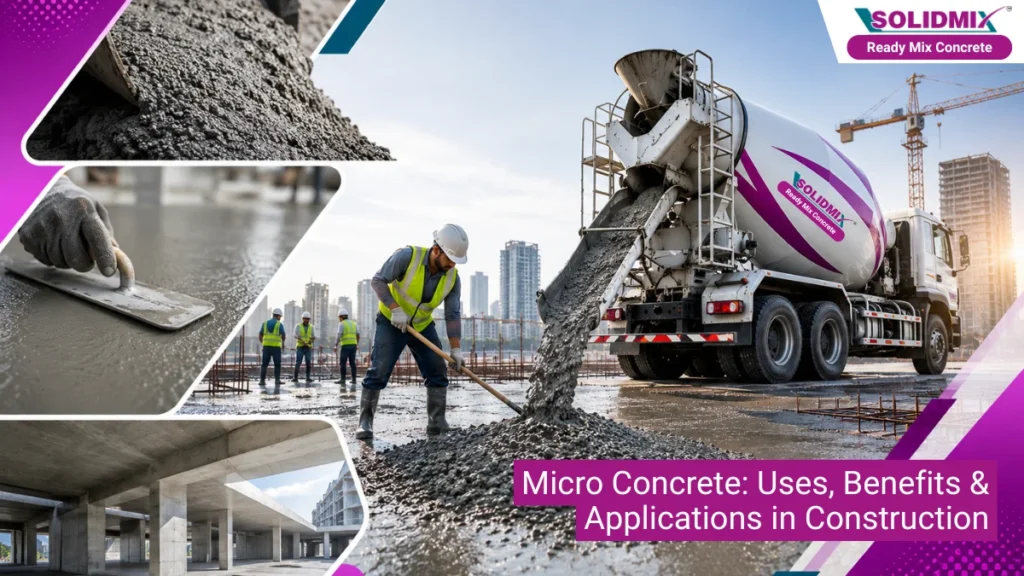
Construction projects require durable and reliable materials to ensure long-term structural performance. One such innovative material gaining popularity in the construction industry is Micro Concrete. Known for its high strength, excellent flowability, and non-shrink properties, micro concrete is widely used for repairing damaged concrete structures, strengthening RCC members, and restoring structural integrity.
Whether it is a residential building, commercial structure, bridge, industrial facility, or infrastructure project, micro concrete provides an effective solution for repairing and rehabilitating concrete surfaces. In this guide, we will explore what micro concrete is, its composition, benefits, applications, and why it has become a preferred choice for construction professionals.
What is Micro Concrete?
Micro concrete is a ready-to-use, high-performance cementitious material specifically designed for repairing and rehabilitating concrete structures. It consists of cement, graded fine aggregates, polymers, and specialized additives that provide excellent flow characteristics and high compressive strength.
Unlike conventional concrete, micro concrete contains smaller aggregate particles, allowing it to flow easily into restricted spaces without segregation. This makes it ideal for repairing congested reinforcement areas where traditional concrete placement can be difficult.
Micro concrete is commonly used in structural repairs, jacketing work, bridge repairs, precast elements, and restoration projects where high strength and durability are required.
Composition of Micro Concrete
The effectiveness of micro concrete comes from its carefully engineered composition. It generally includes:
Cement
Acts as the primary binding material and provides strength.
Fine Aggregates
Specially graded aggregates ensure smooth flow and uniform filling.
Polymers
Improve bonding, flexibility, and durability.
Admixtures
Enhance workability, reduce shrinkage, and improve performance.
Additives
Provide resistance against environmental factors and increase longevity.
The combination of these materials creates a high-performance repair solution suitable for demanding construction applications.
Key Features of Micro Concrete
Micro concrete offers several characteristics that make it highly effective for repair and rehabilitation work.
High Flowability
Flows easily into narrow gaps and congested reinforcement zones without vibration.
Non-Shrink Properties
Reduces the risk of cracking and ensures dimensional stability after placement.
High Strength
Provides excellent compressive and flexural strength for structural repairs.
Superior Bonding
Bonds effectively with existing concrete surfaces.
Durability
Offers long-term resistance against weathering, moisture, and chemical attack.
Easy Application
Can be placed quickly, reducing construction downtime.
Benefits of Using Micro Concrete
1. Ideal for Structural Repairs
Micro concrete is specifically developed for repairing damaged RCC structures. It restores structural integrity and improves load-bearing capacity.
2. Excellent Workability
Its flowable nature allows easy placement in areas where conventional concrete cannot reach effectively.
3. Reduced Shrinkage
Non-shrink formulations minimize cracking and ensure better durability.
4. Faster Construction Process
Ready-to-use micro concrete speeds up repair work and reduces labor requirements.
5. Improved Durability
Structures repaired with micro concrete often demonstrate enhanced durability and longer service life.
6. Cost-Effective Solution
By extending the life of existing structures, micro concrete reduces the need for complete reconstruction.
7. High Bond Strength
Strong adhesion to old concrete ensures reliable repair performance.
Applications of Micro Concrete in Construction
Micro concrete is widely used across various construction and infrastructure projects.
Repair of RCC Columns
Damaged or deteriorated RCC columns can be repaired effectively using micro concrete to restore strength and stability.
Concrete Jacketing
Micro concrete is commonly used in jacketing applications to increase the load-bearing capacity of structural members.
Beam and Slab Repairs
It helps repair cracks, honeycombing, and damaged sections in beams and slabs.
Bridge Rehabilitation
Bridge structures exposed to heavy traffic and environmental stress often require micro concrete repairs.
Industrial Structures
Factories, warehouses, and industrial facilities use micro concrete for maintenance and structural strengthening.
Water Retaining Structures
Reservoirs, tanks, and treatment plants benefit from the durability and strength of micro concrete.
Precast Concrete Elements
Micro concrete can be used in repairing and restoring precast concrete components.
Micro Concrete vs Conventional Concrete
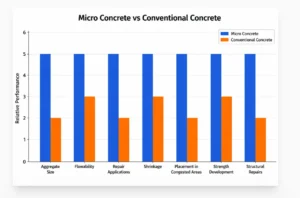
Micro concrete offers significant advantages in repair and rehabilitation projects where conventional concrete may not perform efficiently.
Steps for Applying Micro Concrete
Surface Preparation
The damaged concrete surface should be cleaned thoroughly to remove dust, loose particles, oil, and contaminants.
Reinforcement Treatment
Corroded reinforcement bars should be cleaned and treated with anti-corrosion coatings if required.
Formwork Installation
Leak-proof formwork should be installed around the repair area.
Mixing
Micro concrete should be mixed according to the manufacturer’s recommendations.
Placement
The material is poured into the formwork and allowed to flow naturally into voids and cavities.
Curing
Proper curing is essential for achieving optimum strength and durability.
Industries That Benefit from Micro Concrete
Several industries use micro concrete for repair and maintenance projects:
- Residential Construction
- Commercial Buildings
- Industrial Facilities
- Infrastructure Projects
- Bridges and Flyovers
- Water Treatment Plants
- Power Plants
- Transportation Structures
Its versatility makes it suitable for a wide range of applications.
Why Micro Concrete is Important for Modern Construction
As structures age, they experience wear and tear due to environmental exposure, heavy loads, and material deterioration. Replacing entire structures is often expensive and time-consuming.
Micro concrete provides a practical and efficient alternative by restoring damaged sections while maintaining structural integrity. Its ability to improve strength, durability, and service life makes it an essential material in modern construction and rehabilitation projects.
Why Choose Quality Concrete Solutions for Construction Projects?
Using high-quality concrete products is critical for ensuring the success of repair and construction projects. Reliable concrete solutions help improve structural performance, reduce maintenance costs, and increase the lifespan of buildings and infrastructure.
At Solidmix RMC, we understand the importance of delivering quality concrete solutions that meet modern construction requirements. Our commitment to consistency, durability, and performance helps builders, contractors, and developers achieve long-lasting results across various projects.
Conclusion
Micro Concrete has become one of the most effective materials for concrete repair, rehabilitation, and structural strengthening. Its high flowability, non-shrink properties, excellent bonding strength, and durability make it a preferred choice for engineers and construction professionals.
From repairing RCC columns and beams to rehabilitating bridges and industrial structures, micro concrete offers a reliable and cost-effective solution for extending the life of concrete structures. By choosing quality construction materials and expert solutions, project owners can ensure safety, durability, and long-term performance for their buildings and infrastructure.
Frequently Asked Questions (FAQs)
What is micro concrete used for?
Micro concrete is primarily used for structural repairs, rehabilitation, concrete jacketing, and strengthening damaged RCC structures.
Is micro concrete stronger than conventional concrete?
Micro concrete often provides higher strength and better repair performance due to its specialized composition and non-shrink properties.
Can micro concrete be used without vibration?
Yes. Its high flowability allows it to fill voids and congested reinforcement areas without vibration.
What are the advantages of micro concrete?
Key advantages include high strength, excellent bonding, low shrinkage, easy application, and long-term durability.
Where is micro concrete commonly applied?
It is commonly used in RCC columns, beams, slabs, bridges, industrial structures, water-retaining structures, and infrastructure projects. Need reliable concrete solutions for your next construction project? Contact Solidmix RMC today to explore high-quality concrete products designed for strength, durability, and long-term performance.